Third time around

Marty Walker|30 December 2025
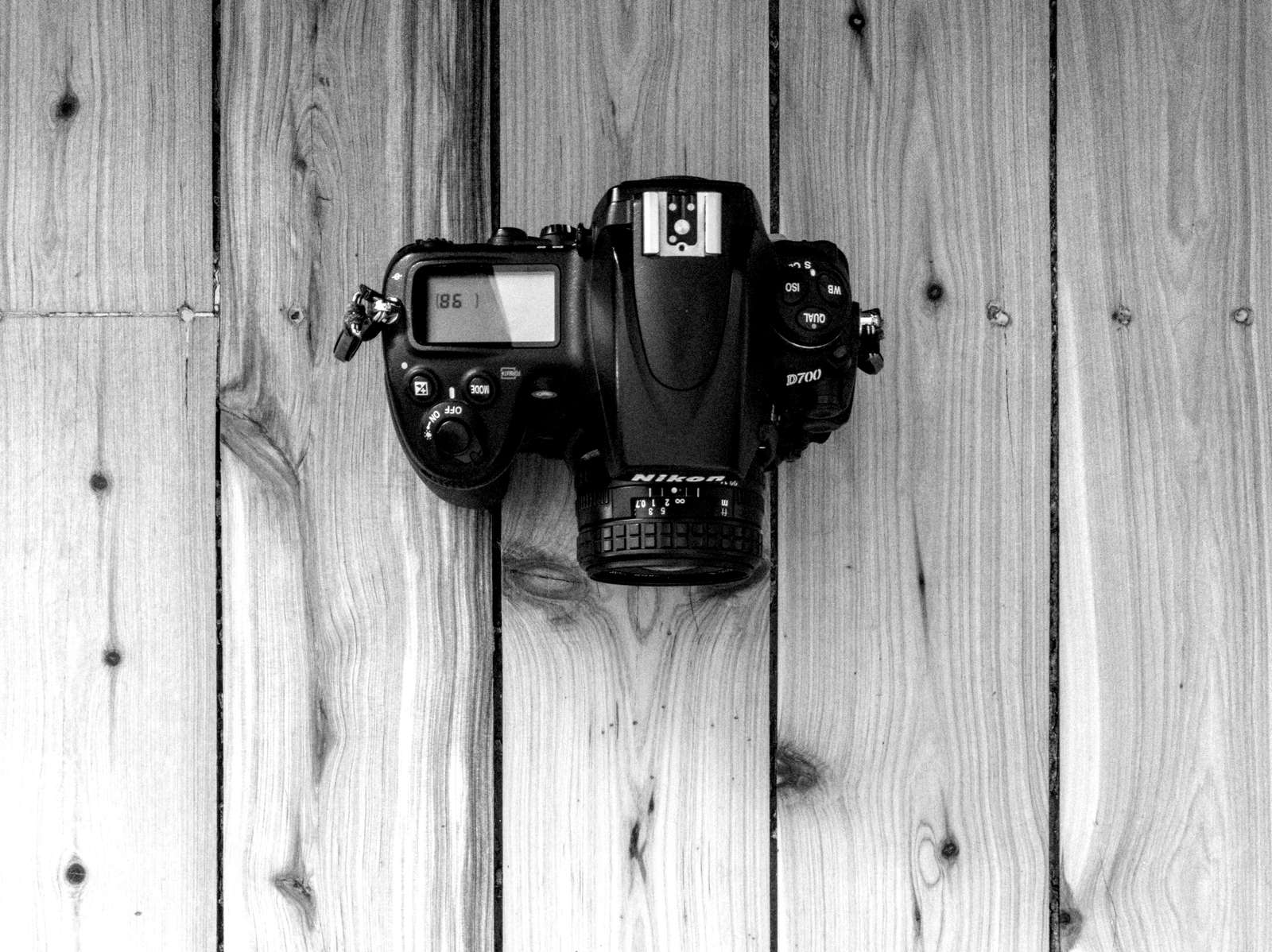
I have a problem. I've bought and sold so many cameras over the past ten years, it's embarrassing.
This is my third Nikon D700 and currently the only Nikon on the shelf. Previous to this I've had the D70, D750, D700, D700, D3 (which I do miss) and the D800E. Threaded between these were other camera brands like Olympus, Fujifilm and Lumix. They all have their strengths and weaknesses and to be fair, they're all sufficient cameras that can handle most tasks.
What attracted me (again) to the D700 was a recent few weeks going through my archive. Early last year (2024) I moved from Exposure X7 to darktable and it was a great opportunity to sift through my work from years past and to reassess what stayed and what was a candidate for the trash. It's not that I accidentally rediscovered my D700 files, it's more likely that after some years predominantly using mirrorless cameras and lenses, it was a reminder that the D700 images looked every bit as good as from something more 'modern'. Ever tried to complete an edit on hundreds of 45 megapixel files? Cruising through a set of 12 megapixel ones from a D700 will be a joy. Not only that, most of my lens collection consists of manual focus primes from the 70s and 80s that render beautifully on this sensor. I know there's some conjecture as to the origins of it's silicon but really, there's no doubt there is something special about it in comparison to modern offerings.
Video
Video has it's place, undoubtably: I just couldn't care less about it when all I want to make is photographic work. We're now at a point where every camera being sold has extraordinary video capabilities: 4k, 8k and 12k (good grief). Even medium format digital cameras have video and I can't fathom dreaming up an excuse as to why one would buy such an expensive device for the sole purpose of making video work.
EVF
Great to have and I've used ones that are incredible (the Lumix S1 to be specific), but nothing really beats an optical viewfinder. EVFs can make you lazy and give you a preview very close to what you want in your frame. But an OVF makes you think about where to you need to meter your scene (if you're a spot metering masochist like me that is) so as not to blow your highlights. Let shadows be shadows but highlights are sacred. Once you lose them there's no getting them back.
Battery life
Use a mirrorless camera for any length of time and you'll (very) soon notice how quickly the battery drains. Give the gift of a new battery to your D700 and you'll be set for days of off-and-on shooting.
12MP
I've used high megapixel cameras such as the Lumix S1R and the Nikon D800E, the former having a hi-res shot mode that stitches multiple shots into a 187 megapixels behemoth of a file. Even when I had that camera I rarely used it. Even with the D800E 36 megapixels felt like too much, for me at least. (Some of the wedding photographers I've shot for would occasionally fire off a quick text-of-woe at having to edit their second-shooters very full SD card. Good god man we were only at the ceremony for 20 minutes!)
'Sufficiency' is a word I keep coming back to when printing from a 12 megapixel file. Resolution is way down on the list when preparing a file for output. Is it interesting? Is the composition good? Is there some magic happening with this camera/lens combination? These are, as are most of the points in this blog post, subject to personal taste and opinion. Just know it is entirely possible to print an A2 (16.5 x 23 inches) and it look respectable at a normal viewing distance. If social media is your main medium of choice then or course you are well looked after with 12 megapixels.
So here I am again with D700 #3, re-uniting this tank of a camera with some old glass I couldn't part with. It's evoked some ideas for projects that involve being more in the moment and making work using a machine that has simplicity at it's core.